
Shutterbug camera guide
How to Buy a Used Camera
A model name tells you what a camera was when it was new. A good used listing tells you what that exact camera is today.
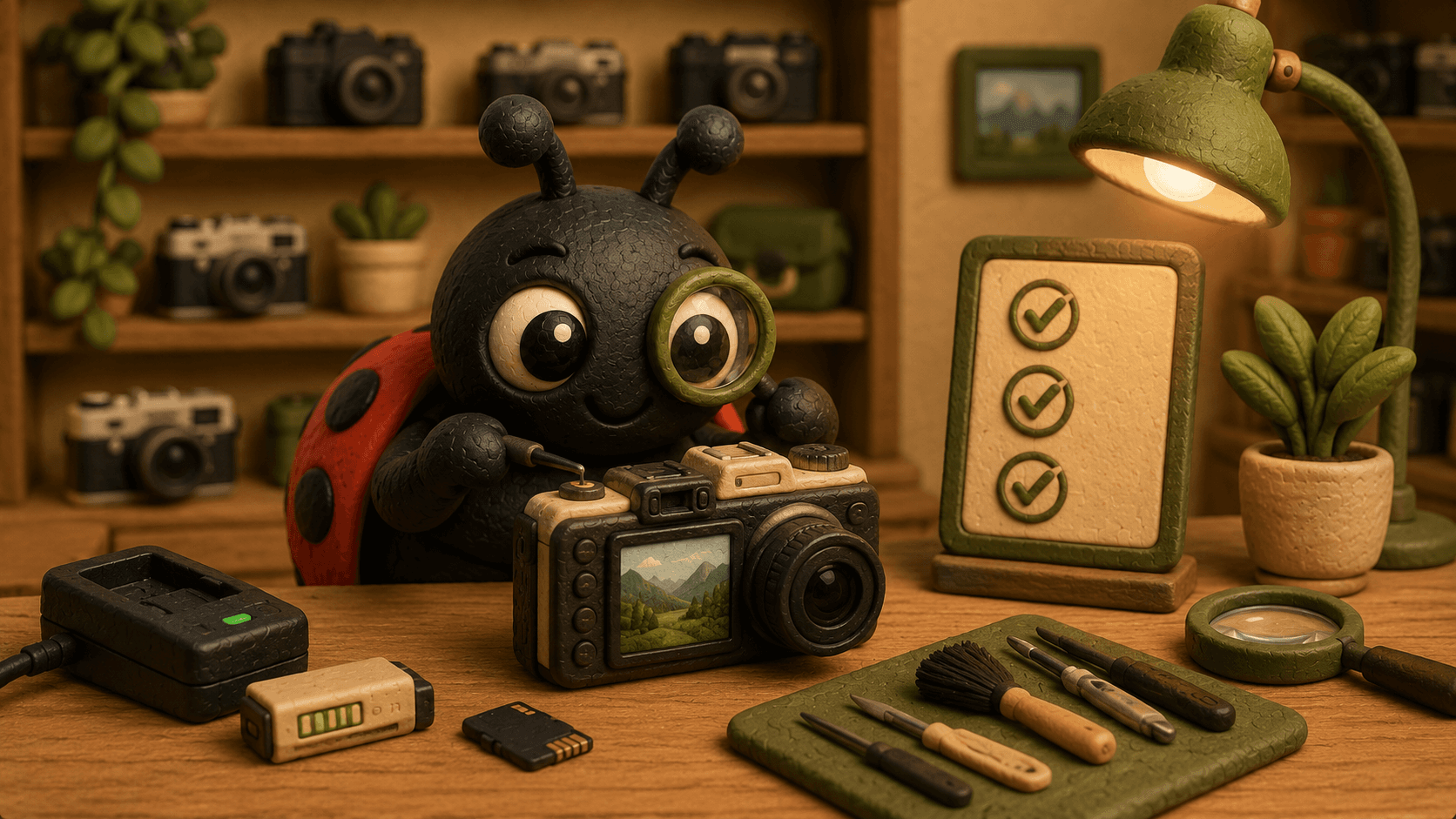
Start with the exact item, not only the model
Two used cameras with the same model number can have very different histories. One may include a reliable battery and charger, while another has corrosion, a sticky lens, or accessories that no longer work. Look for actual-item photos and notes written for the camera being sold.
A useful listing should separate confirmed functions from assumptions. Phrases such as powers on, flash fires, records to card, shutter releases, or film advance works are more meaningful than a broad claim that a camera looks good.
- Confirm that photographs show the item you will receive.
- Read both cosmetic and functional condition notes.
- Treat untested functions as unknown, not working.
- Check the return policy before checkout.
Check power, storage, and consumables
Older digital cameras may use proprietary batteries, uncommon chargers, Memory Stick, xD Picture Card, CompactFlash, or limited-capacity SD cards. A low-priced camera can become inconvenient if the correct charger or media is difficult to source.
Film cameras introduce different requirements. Confirm the film format, battery type, and whether the meter or shutter depends on power. Instant cameras require a specific film family, and those formats are not interchangeable.
- Battery model and whether it holds a usable charge
- Charger, power cable, or dock included
- Memory-card or film format
- Any required cable, adapter, ink, toner, or other consumable
Read the testing checklist by camera type
A compact digital camera can be checked for power, lens extension, zoom, flash, controls, display, storage, and photo capture. A DSLR or mirrorless body adds sensor, autofocus, viewfinder, port, shutter, and lens-mount considerations.
Film-camera testing varies more. Relevant checks can include shutter speeds, film advance and rewind, meter response, lens focus and aperture, flash, battery compartment, and the film door or latch. Testing without film cannot prove every part of the photographic process.
Understand cosmetic wear and optical issues
Normal scratches, finish wear, and small marks may be acceptable on a camera that works well. Damage around the battery door, lens barrel, card slot, hinges, or controls deserves closer attention because it can affect everyday use.
For lenses, distinguish ordinary internal dust from haze, fungus, separation, deep scratches, oil, or mechanical damage. The mount must also match your camera, and an adapter does not guarantee every autofocus or metering feature.
Know when parts/repair is the right choice
Parts/repair items are projects, donors, display pieces, or restoration candidates. They should not be treated like ready-to-shoot inventory. A clear listing identifies what was checked, what was not checked, what is missing, and the visible issues.
Choose a tested camera when you need dependable everyday use. Choose parts/repair only when you are comfortable with additional unknown faults and the possibility that repair may not be economical.